
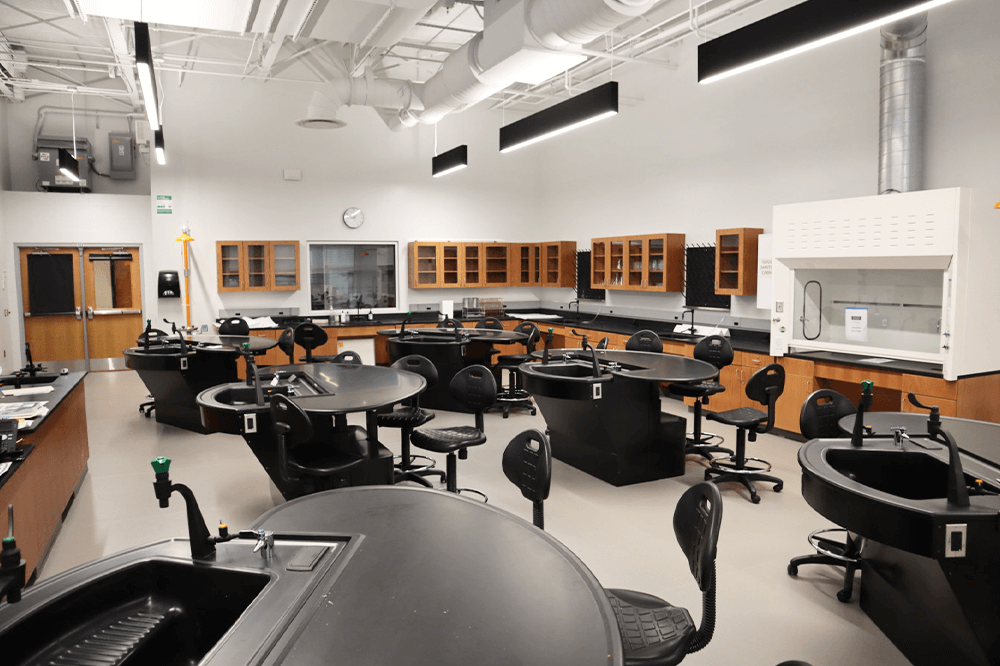
Preventative Maintenance: What Schools Should Be Doing Annually
As a new school year approaches, classrooms and laboratories are being prepared for students to return. For science and STEAM labs, that preparation should include more than organizing supplies and cleaning work surfaces.
An annual preventative maintenance review gives schools an opportunity to identify worn equipment, address potential safety concerns, and make sure laboratory spaces are ready to support another year of instruction.
Regular maintenance can also help schools get more from their investment. Catching small issues early can help prevent unexpected equipment failures, avoid unnecessary disruption during the school year, and identify areas that may need to be included in future capital planning.
So, what should schools be looking at each year?
Start With a Complete Lab Walkthrough
Before focusing on individual pieces of equipment, take a step back and evaluate the laboratory as a whole.
Look at how the room has held up over the previous school year. Are work surfaces damaged? Are cabinet doors or drawers difficult to operate? Are fixtures leaking? Has equipment been moved in a way that affects accessibility or workflow?
This is also an opportunity to consider whether the space is still meeting the needs of the program. A lab can be operational but no longer function effectively for the way teachers and students are using it.
Longo has been planning, building, and renovating K-12 and higher education laboratories for decades. Its educational laboratory solutions include casework, fume hoods, lab tables, workstations, safety equipment, storage, fixtures, and other components that may need to be evaluated as a laboratory ages.
Inspect Casework, Work Surfaces, and Storage
Laboratory furniture experiences significant wear over time, particularly in high-use educational environments.
Annual inspections should include cabinets, drawers, hinges, shelving, worktops, sinks, and other frequently used surfaces. Look for loose hardware, damaged components, signs of corrosion or moisture, cracks, and other deterioration that could affect performance or safety.
Storage deserves particular attention. Chemicals and other hazardous materials need to be stored appropriately, and storage areas should remain organized and in good condition.
The National Institute for Occupational Safety and Health’s School Chemistry Laboratory Safety Guide provides guidance for schools on chemical storage, emergency equipment, chemical waste, hazard assessment, and other laboratory safety considerations.
For schools evaluating aging cabinetry, Longo offers educational laboratory casework in fixed and modular configurations designed for high-use educational environments.
Make Sure Fume Hoods Are Performing Properly
Fume hoods are among the most important pieces of safety equipment in laboratories where hazardous gases, fumes, particles, or liquids may be handled.
They should not simply be assumed to be working because the fan turns on.
Schools should incorporate appropriate inspection, testing, and maintenance of their fume hoods into their laboratory safety program and follow applicable requirements, manufacturer recommendations, and institutional procedures.
Longo notes that rigorous maintenance and regular inspections are important to maintaining fume hood functionality. Its educational fume hood solutions include configurations designed specifically for school science environments.
Schools should also consider whether an older fume hood still meets the needs of the activities being performed. Changes to curriculum, equipment, HVAC systems, or the room itself can affect laboratory requirements over time.
Review Eyewashes, Safety Showers, and Emergency Equipment
Emergency equipment should be another priority during annual planning.
Schools should review eyewash stations, safety showers, safety cabinets, and other emergency equipment to make sure they are accessible, maintained, and incorporated into the school’s required inspection and testing procedures.
This is not something that should happen only once a year. An annual preventative maintenance review is an opportunity to verify that the appropriate ongoing testing and inspection program is actually being followed.
Longo offers a range of laboratory safety cabinets and equipment, including emergency eyewashes, shower stations, safety storage cabinets, and other equipment for educational laboratories.
For additional guidance, the NIOSH Safety Checklist Program for Schools provides schools with a framework for identifying hazards, addressing safety concerns, and involving staff in an ongoing safety and health program.
Review Chemical Storage and the Chemical Hygiene Plan
Preventative maintenance isn’t limited to furniture and equipment. Schools should also periodically review how chemicals are being managed within the laboratory.
The Occupational Safety and Health Administration’s Laboratory Standard requires covered workplaces to maintain a written Chemical Hygiene Plan that establishes procedures, responsibilities, and control measures for protecting employees from hazardous chemicals. Schools should determine which federal, state, and local requirements apply to their facilities and programs.
The OSHA Chemical Hygiene Plan guidance outlines laboratory safety requirements and resources, while the NIOSH school laboratory guide provides additional information relevant to educational environments.
For New Jersey public schools, the state’s PEOSH Laboratory Standard resources also provide information about chemical hygiene practices and laboratory requirements.
Check Plumbing, Electrical, and Utility Connections
A small leak or damaged outlet may not seem significant at first, but issues involving laboratory utilities can become larger problems if they go unnoticed.
As part of a preventative maintenance review, schools should look for visible issues involving faucets, sinks, gas fixtures, electrical connections, plumbing, and other laboratory utilities. Any concerns should be evaluated by appropriately qualified personnel.
This is particularly important in older laboratories where infrastructure may have been installed for a very different curriculum or equipment load than the space supports today.
Use Maintenance to Inform Long-Term Planning
An annual review shouldn’t end with a list of repairs. It can also provide valuable information for future facility planning.
If the same cabinets, fixtures, workstations, or pieces of equipment continually require attention, schools can begin budgeting for replacement before failure creates an urgent need. Facilities teams can also identify areas where the laboratory no longer supports current curriculum, technology, accessibility, or teaching methods.
Longo’s West Caldwell Tech Campus laboratory renovation provides one example of how an outdated educational environment was renovated to better support modern Career and Technical Education programs.
Taking a proactive approach gives schools more control over when and how improvements are made rather than waiting until equipment fails or a space becomes unusable.
Preventative Maintenance Is an Investment in the Lab’s Future
Educational laboratories are high-use environments. Even well-designed spaces require ongoing attention to remain functional, safe, and effective.
An annual preventative maintenance review gives schools an opportunity to understand the condition of their labs, address issues before they become larger problems, and plan more strategically for future improvements.
As the school year approaches, it’s a good time to ask a simple question: Is your lab ready for another year of use?
If your school is evaluating aging laboratory furniture, equipment, or an upcoming renovation, Longo Labs can help assess your needs and develop a solution designed for the way your space is used.
Frequently Asked Questions
What preventative maintenance should a school lab receive each year?
Schools should conduct a comprehensive review of laboratory furniture, work surfaces, storage, fume hoods, emergency equipment, utilities, and the overall condition of the space. Safety procedures and chemical management practices should also be reviewed according to applicable regulations, standards, manufacturer requirements, and school policies.
How often should school laboratory equipment be inspected?
There is no single inspection frequency that applies to every piece of laboratory equipment. Requirements vary by equipment type, manufacturer guidance, applicable regulations, and school or district procedures. Some safety equipment requires checks more frequently than annually. An annual maintenance review should therefore complement—not replace—the required ongoing inspection and testing schedule.
Why is preventative maintenance important for school laboratories?
Preventative maintenance can help identify deterioration, equipment problems, and potential safety concerns before they result in larger repairs or disruptions. It also gives facilities teams information they can use for budgeting and long-term capital planning.
What are signs that a school lab may need renovation instead of maintenance?
Recurring repairs, deteriorating casework or work surfaces, outdated infrastructure, insufficient electrical or utility capacity, accessibility concerns, and layouts that no longer support the curriculum can indicate that a larger renovation should be considered.
When is the best time to evaluate a school laboratory?
Summer and the period before the start of the school year can be particularly useful because facilities teams can assess the space before regular classroom use resumes. However, laboratory safety equipment and critical systems should be inspected and maintained according to their required schedules throughout the year.